REVIEW · SEATTLE
Seattle’s Original Guided Harbor Cruise
Book on Viator →Operated by Argosy Cruises · Bookable on Viator
A one-hour cruise can feel like a shortcut. You’ll get live narration plus a front-row look at Seattle’s working harbor from Elliott Bay and Seattle Harbor. Guides call out what you’re seeing as you pass piers, stadiums, and landmarks like the Space Needle and Great Wheel. If you end up with guides like Casey or Nate, expect lots of clear, story-driven details, not just names of places.
Two things I like a lot: the views from both decks (covered below, open above) and the way the route mixes postcard Seattle with the port at work. One consideration: it depends on weather and daylight for the best mountain views, so chilly wind and partial visibility can happen.
In This Review
- Key highlights you should care about
- Why This Classic Seattle Harbor Cruise Still Hits
- Price and timing: getting value out of $45.70
- Boat setup: how to choose your seat fast
- Pier 55 start: Elliott Bay and the waterfront story
- Pier 57 and Great Wheel: the city’s big loop from the harbor
- The Space Needle viewpoint: panoramic views plus close-ups
- Myrtle Edwards Park: the calm stretch for water-and-city photos
- Terminal 91 and cruise ships: when Seattle shows you the port reality
- Pier 59 and the Seattle Aquarium zone
- Puget Sound and the Olympic view: what the guide helps you see
- Alki Beach: the movie-famous shore with a local vibe
- Rainier, the Cascades, and a key weather truth
- Stadium district and the working skyline: T-Mobile Park to Lumen Field
- Harbor Island and container ships: the industrial wow moment
- Smith Tower on the skyline: a quick history wink
- Who should book this harbor cruise
- A note on service and conduct
- Should you book this Seattle Original Guided Harbor Cruise?
- FAQ
- How long is the Seattle harbor cruise?
- Where do I meet for the tour?
- Is food and drink included?
- Do I get indoor seating, or is it all outside?
- What if the weather is bad?
- Are restrooms and service animals available?
Key highlights you should care about
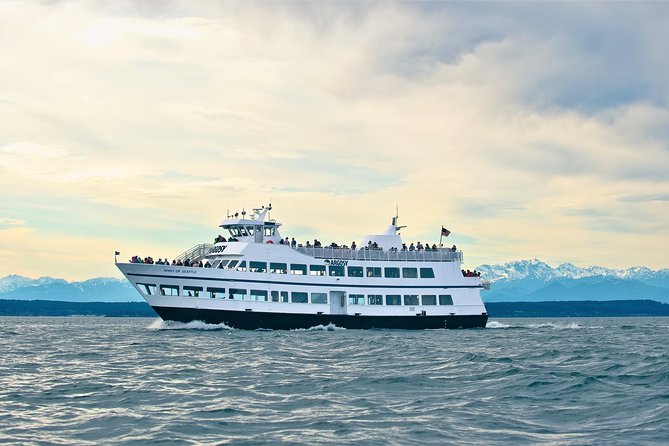
- A true harbor mix: skyline sights plus the loading-and-unloading side of Seattle’s port
- Photo-friendly angles: Space Needle and skyline views from the water, with chances for wide shots
- Mountains only when conditions cooperate: Cascades, Olympics, and possibly Mt. Rainier weather permitting
- Good onboard comfort: indoor seating downstairs and an open upper deck for fresh air
- It’s fast: about one hour, so it fits tight schedules
Why This Classic Seattle Harbor Cruise Still Hits
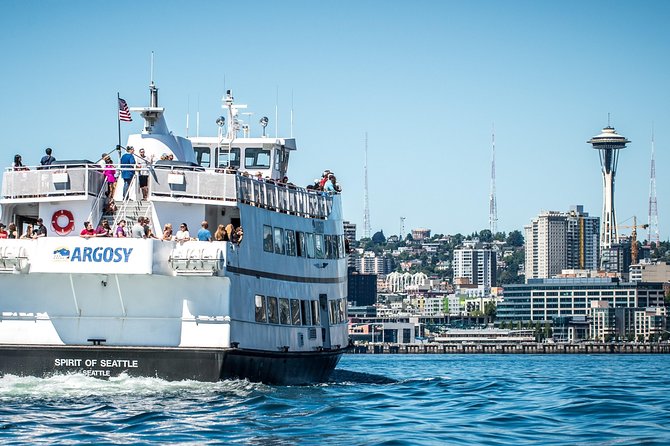
Seattle works best from the water. Roads and sidewalks show you the city. This cruise shows you how the city grew around the water and how it still depends on it.
This is the kind of tour that gives you momentum fast. Within an hour, you see the Space Needle area, the Great Wheel at Pier 57, and a chunk of the waterfront that most people only skim from land. Then you swing over toward the industrial side, where massive ships and cranes turn the harbor from scenery into a real system. It’s a nice balance: you get wonder and you get context.
Price-wise, $45.70 for about an hour is not a bargain price, but it’s fair for what you’re buying: live narration, prime viewing time, and the chance to see Seattle from Elliott Bay without paying for a longer, more expensive sightseeing combo. It’s also the sort of activity that you can book and forget—until you’re standing on the pier with the boat ready to leave.
Price and timing: getting value out of $45.70
For $45.70, you’re paying for three main things: the boat time, the commentary, and the locations you’ll only get from the water. You also get restrooms onboard and space to sit, both important on a 1-hour trip when you still want to take photos.
A useful planning note: this cruise tends to book ahead (on average about 11 days). If you’re traveling in a busy season or on a weekend, don’t wait until the last minute. Secure your time, then build the rest of your day around it.
Weather is another timing reality. The route is designed so you still get a lot in foggy or gray conditions, but the big mountain payoff—Olympics and Cascades, and possibly Mt. Rainier—depends on visibility. If the provider cancels for poor weather, you’ll be offered a different date or a full refund. That flexibility is a big deal for a port city like Seattle.
Boat setup: how to choose your seat fast
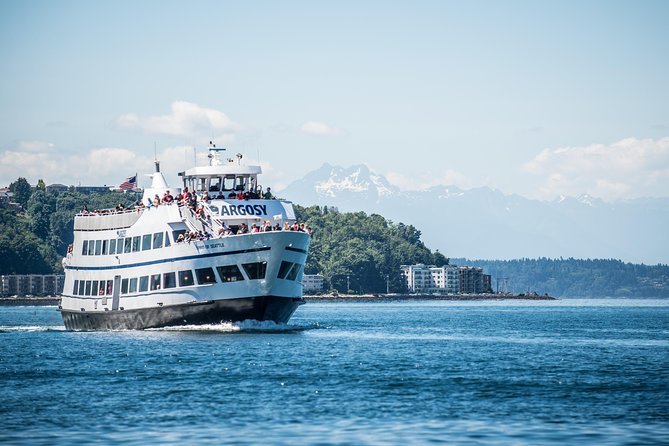
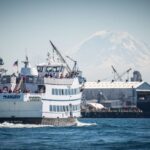
The ship typically has an enclosed lower deck and an open upper sun deck. If you want fresh air and skyline photos with minimal obstruction, you’ll probably gravitate upstairs. If you want shelter from wind (or you’re traveling in winter), the lower deck is your comfort zone.
Either way, you’ll have restrooms onboard, and you can buy food and drinks during the cruise. Reviews also mention a bar and snacks being available, so if you like a casual onboard break, it’s built in. One small practical tip: if you know you’re sensitive to cold, bring layers before you board. Seattle can go from cool to windy quickly, even on days that look mild from shore.
And about sound: the narration is live, and you’ll enjoy it most when your spot lets you hear over deck noise. On one trip, a group of teenagers talking nearby made it harder to follow the guide. That doesn’t mean the tour is quiet, but it’s a reminder to pick your seating with your hearing in mind.
Pier 55 start: Elliott Bay and the waterfront story
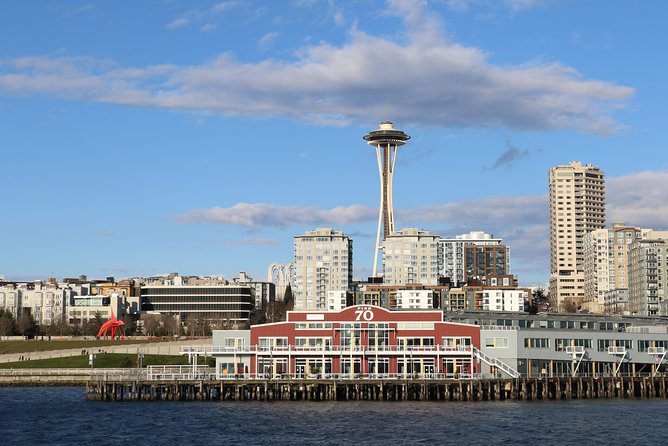
Your tour begins at Pier 55 (Alaskan Way) at check-in. You’ll want to arrive early because check-in is 30 minutes prior, and the boarding gate closes 5 minutes before departure. That’s the kind of detail that saves you from stress when you’re also trying to find coffee and get your camera ready.
From the first moments, you’ll move past Seattle’s lively central waterfront. The guide points out landmarks and explains how each area works, past and present. This is where the tour’s “original” reputation makes sense. A guided harbor route isn’t just a ride—it’s a moving timeline of piers, industry, and the city’s layout along the bay.
You’ll also start building your mental map. Once you know what you’re seeing—Space Needle direction, Great Wheel zone, and the industrial corridor—you’ll understand Seattle better later, even if you never return to the water.
Pier 57 and Great Wheel: the city’s big loop from the harbor
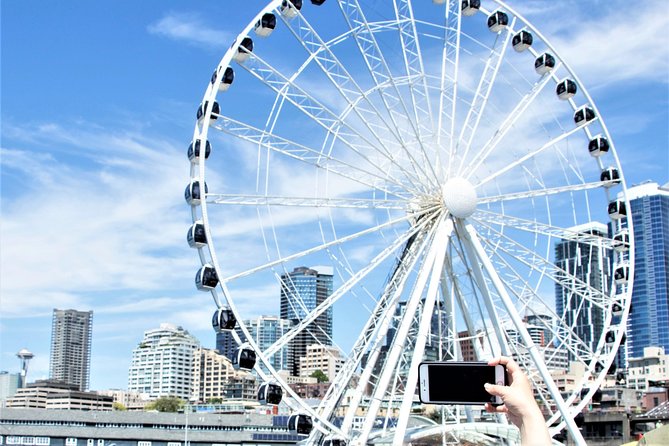
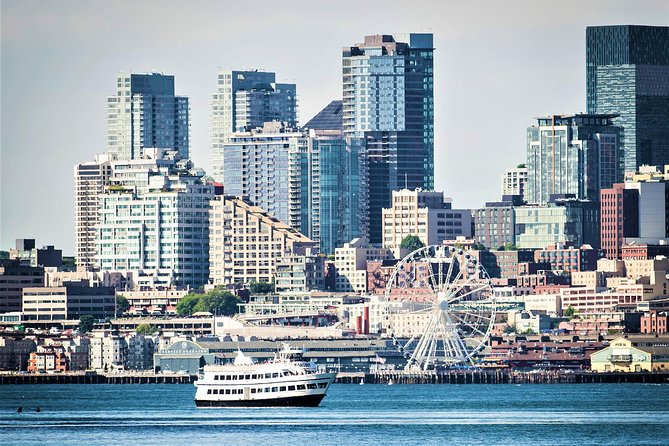
As you cruise by, you’ll get views of the Seattle Great Wheel at Pier 57. This isn’t just a photo moment. From the water, you can see scale—how that bright Ferris wheel sits in the waterfront scene and how it connects to the rest of downtown.
The Great Wheel is also a reminder that Seattle doesn’t only do grand views. It does view-meets-fun. Since it opened in 2012, it’s one of the more modern waterfront anchors. From the ship, it looks like another layer of the city’s skyline, not something tucked away behind hotels.
If you want to take photos, this part of the route is a good time to practice quick shots. Lighting can change fast near the waterfront, especially on bright or partly cloudy days.
The Space Needle viewpoint: panoramic views plus close-ups
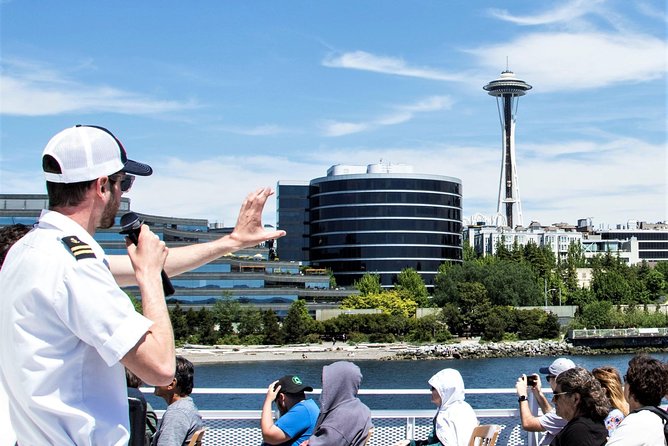
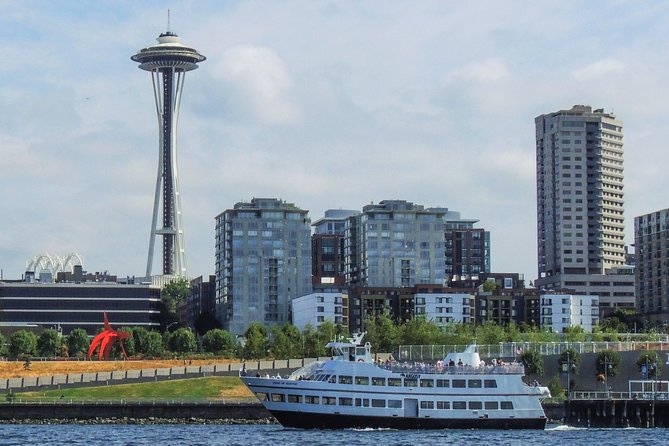
The tour makes sure you pass by the Space Needle with both up-close and panoramic opportunities. You’ll get a view that’s hard to replicate from the sidewalk because the boat changes your angle as it moves.
There’s also a practical advantage here: you can shoot the Needle as a standalone landmark and also capture it within the skyline. That’s key. Great city photos usually include context, not just one iconic structure.
And if Mt. Rainier is visible that day, you’ll understand why Seattle people get excited about clear weather. The combination of harbor activity, downtown lines, and mountain silhouettes is exactly the kind of contrast the city is famous for.
Myrtle Edwards Park: the calm stretch for water-and-city photos
As you move along, you’ll pass Myrtle Edwards Park. Even if you’ve never walked it, you’ll recognize the vibe: small but strong for views. It sits right along Elliott Bay with a 1.25-mile biking and pedestrian path, linking downtown Seattle to the Magnolia neighborhood.
From the boat, it’s a breather in the visual rhythm. Instead of only towers and cranes, you get water texture, sky space, and a cleaner horizon line for photos. If you’re someone who likes shots that don’t look like typical tourist angles, this is the spot.
The trade-off is that it’s brief. This is an hour-long cruise, so you’ll see it, not explore it. But you’ll come away with a stronger sense of where you might want to go later if you want a longer waterfront walk.
Terminal 91 and cruise ships: when Seattle shows you the port reality
One of the most memorable parts of this cruise is how close you get to a major port area—Terminal 91, one of Seattle’s main cruise terminals. In port, you’ll see large cruise ships docked there, and the guide explains Seattle’s long ties to routes like Alaska’s Inside Passage.
This is where the tour gets real, fast. On land, the port can feel distant and industrial. From the water, you see scale up close. You also see how Seattle organizes passenger movement through the port, not just cargo lanes.
If you’re a “how things work” person, you’ll appreciate the narration here. It turns what could be random industrial scenery into something you can actually picture and understand.
Pier 59 and the Seattle Aquarium zone
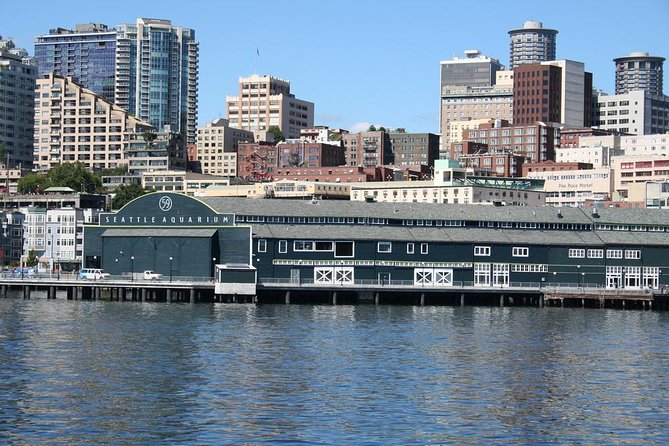
You’ll also pass by Pier 59, near the Seattle Aquarium. The aquarium sits right on the waterfront and opened in 1977. The tour also notes an expansion in 2024 with the Ocean Pavilion.
Even if you’re not doing aquarium time, the proximity matters. It’s one more way this route stitches together Seattle’s waterfront identity: entertainment and education on one side, port operations on the other.
From the ship, you can get the waterfront context without buying extra timed tickets. If your day is tight, that’s a real benefit.
Puget Sound and the Olympic view: what the guide helps you see
Next, you’ll see sweeping water views across the inland estuary between the Olympic Peninsula and Seattle metro area. This is part of Puget Sound, about 95 miles long, and it’s where you get a sense of the wider geography around Seattle.
As you look toward the horizon, the guide connects the dots to the Olympic Mountains—rugged terrain across the water. On a clear day, you may even see snow-capped peaks. If you’re lucky with weather, it’s one of those moments where the city feels small in the best way.
One practical note: don’t plan to stand for the perfect shot at the expense of the narration. These views are worth it, but the guide is timing your best moments as the ship moves.
Alki Beach: the movie-famous shore with a local vibe
In the West Seattle area, you’ll pass Alki Beach, a well-known stretch partly associated with the movie Sleepless in Seattle. It’s also popular for beach volleyball, so the area has a fun, social vibe.
From the harbor, the beach reads like a long strip of “Seattle but beachy.” It’s about 2.5 miles long, and you’ll get a sense of that West Seattle feel even if you don’t get off the boat.
If you’re short on time on land, this is a good way to preview where you might want to spend a sunset later. You won’t get the sand under your feet, but you’ll know what you’re looking at.
Rainier, the Cascades, and a key weather truth
The cruise includes a big promise: you might get a glimpse of Mt. Rainier, and the route also highlights the Cascade and Olympic ranges. The catch is right there in the details: it’s weather permitting.
When visibility is good, this is the payoff. When it’s not, you still get ocean, city, and the sense of Seattle’s mountain proximity. But if you’re traveling during a low-visibility stretch, temper expectations. Clear days are the best days here.
Still, even without Rainier, the contrast between downtown and the hills across the water is worth it. Seattle’s magic isn’t just one mountain. It’s how the whole area layers together.
Stadium district and the working skyline: T-Mobile Park to Lumen Field
You’ll also pass Seattle’s sports belt. You’ll see T-Mobile Park, home of the Seattle Mariners, formerly Safeco Field. On a rainy day, you might see the retractable roof closing, since that’s part of how the stadium operates.
Right next to it is Lumen Field, home of the Seattle Seahawks and the Seattle Sounders. You’ll see both stadiums in the same skyline sweep, and the tour highlights their role beyond sports, including concerts. One review even jokes that Lumen Field is loud enough to cause small earthquakes—so yes, it’s a loud kind of venue, and it shows in the energy around it.
From the water, these buildings aren’t just sports stops. They’re part of Seattle’s identity and a quick way to understand the city’s layout.
Harbor Island and container ships: the industrial wow moment
The tour doesn’t shy away from the industrial district. You’ll get up-close views of container ships as they’re loaded and unloaded in the Port of Seattle area on Harbor Island, a man-made island built in 1909.
This is one of the most visually impressive parts of the trip. Big cranes, repetitive loading rhythms, and the scale of the ships make it feel like a living machine. If you like seeing the parts of a city most visitors never clock, you’ll enjoy this section.
It also helps you understand Seattle’s economy. This isn’t a decorative harbor. It’s a working one.
Smith Tower on the skyline: a quick history wink
To wrap up the skyline sweep, you’ll see Smith Tower. It’s Seattle’s original skyscraper, 35 floors high, with an open-air observatory at the top. Even if you don’t go up there, the sight from the harbor connects old Seattle to modern waterfront life.
This part is fast, but it adds texture. It’s not only glass and towers. It’s also the older forms that anchored Seattle’s growth.
Who should book this harbor cruise
This cruise is best for people who want an efficient, guided “big picture” Seattle moment.
You’ll like it if:
- you want one-hour value without hopping between too many neighborhoods
- you care about the contrast between downtown sights and port life
- you want photo chances of the Space Needle and skyline from water
It may feel less ideal if:
- you’re expecting a long nature-focused trip
- you’re highly sensitive to wind or noise and prefer a very quiet experience
- you’re traveling on a day with poor visibility and you’re set on seeing mountains
For families, it’s also a solid option. Kids 3 and under ride free with a boarding pass. Everyone else can enjoy the onboard seating and restrooms. Service animals are allowed too.
A note on service and conduct
Most experiences here run smoothly, and the guide quality shows up in comments about clear narration and friendly crew energy. Some guides are called out by name, including Casey, Nate, and Angie.
That said, one negative review raised a serious concern about discrimination and lack of respectful attention. The provider responded by saying they don’t tolerate discrimination and that the issue was reviewed by management. I can’t tell you what you’ll personally experience, but it’s worth paying attention to how you’re treated and to the fact that the company did respond directly to the allegation.
Should you book this Seattle Original Guided Harbor Cruise?
If you want a simple, high-impact Seattle activity, I think this is a strong yes. It gives you waterfront context, skyline photos from the water, and an unusually close look at how Seattle’s port actually functions—all in about an hour.
Book it if you’re planning a first-time Seattle visit, especially if you’ll spend most of your time on foot. You’ll come away with a map in your head. And on a clear day, the mountain views can be the kind of Seattle moment you remember all year.
Skip it or reconsider only if weather is likely to be rough for visibility and you’re traveling with very strict timing for other outdoor stops. If you’re flexible, this cruise is a dependable way to get Seattle’s waterfront story without overplanning.
FAQ
How long is the Seattle harbor cruise?
The cruise runs about 1 hour.
Where do I meet for the tour?
You meet at Pier 55 on Alaskan Way, Seattle, WA 98101. The tour ends back at the meeting point.
Is food and drink included?
No. Snacks and beverages are available for purchase onboard.
Do I get indoor seating, or is it all outside?
There’s both an enclosed lower deck and an open upper sun deck, so you can choose based on weather.
What if the weather is bad?
The experience requires good weather. If it’s canceled due to poor weather, you’ll be offered a different date or a full refund.
Are restrooms and service animals available?
Restrooms are available on board, and service animals are allowed.