REVIEW · TOKYO
Tokyo Bay Yakatabune Dinner/Day Cruise with Japan Show and Drinks
Book on Viator →Operated by Orange Tour · Bookable on Viator
If you want Tokyo at night without a long day of transit, this cruise fits. You’ll be fed on a traditional boat, entertained live, and treated to real city-light views from the water.
I particularly like the sukiyaki dinner (when you choose the meal option) paired with unlimited soft drinks, and the chance to step up for open-air photos instead of filming through glass. One thing to consider: seating and the deck temperature can vary a lot, since you’ll remove shoes and cabin seating is assigned at random.
In This Review
- Key points before you go
- Tokyo Bay yakatabune dinner cruise: what you’re really paying for
- What happens on board (and why the format works)
- The dinner: sukiyaki hot pot and why it’s a good match for the cruise
- Live music on the water: the part you’ll remember
- Rainbow Bridge at night: the biggest “wow” photo moment
- Odaiba stop: Statue of Liberty replica and waterfront viewpoints
- Fuji TV waterfront: iconic architecture without overplanning
- Tokyo Tower by the water: classic silhouette, 333 meters up
- Timing, seating, and deck strategy (so you’re not stuck waiting)
- Who this cruise suits best (and who should consider something else)
- Price check: is $65 worth it?
- Getting the most out of it: practical advice that pays off
- Should you book Tokyo Bay Dinner/Day Cruise with Japan Show and Drinks?
- FAQ
- How long is the Tokyo Bay yakatabune dinner cruise?
- What’s included in the ticket?
- Is alcohol included?
- Do I need transportation to the pier?
- Do I have to remove my shoes?
- What type of seating should I expect?
- What stops will I see during the cruise?
- What if weather is bad?
Key points before you go
- Unobstructed open-air deck views for photography, plus big Tokyo skyline moments at night.
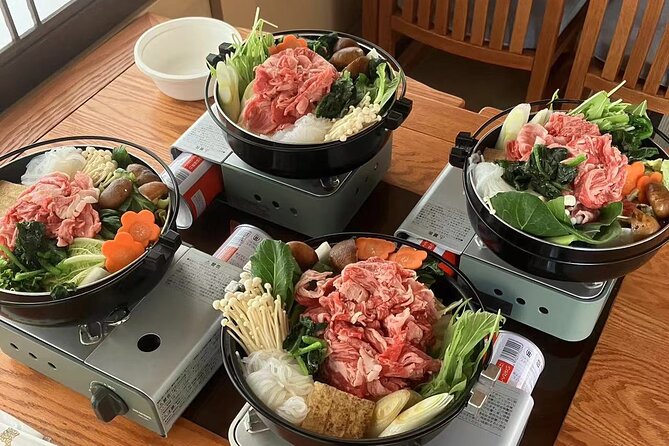
- Sukiyaki hot pot on board (meal option), served with a cozy, hands-on feel.
- Live traditional music performance during the cruise, including shamisen-style entertainment.
- Rainbow Bridge and Tokyo Tower are built into the water route, so you’re not just eating in the dark.
- Tatami or chair seating is random, and shared tables may be used on a smaller boat.
Tokyo Bay yakatabune dinner cruise: what you’re really paying for
This is one of those Tokyo experiences that’s more than a meal and more than a photo boat. You’re buying three things in one package: a moving viewpoint, live cultural entertainment, and a sit-down dinner that doesn’t require you to hunt down reservations.
At $65 per person for about 1 hour 40 minutes, the value comes from compression. Tokyo can be amazing, but it can also eat your time. Here, you get a concentrated evening with major waterfront landmarks—Rainbow Bridge, the Odaiba area, and Tokyo Tower—while you’re eating and watching music happen right in your space.
Also, the format matters. You’re on a yakatabune, a traditional-style boat experience that uses a laid-back, slightly cozy setup. Reviews highlight how warm the crew feels, and that matches the vibe you should expect: this is not a stiff, lecture-style tour. It’s a dinner cruise with storytelling through the sights, plus performance time.
What happens on board (and why the format works)
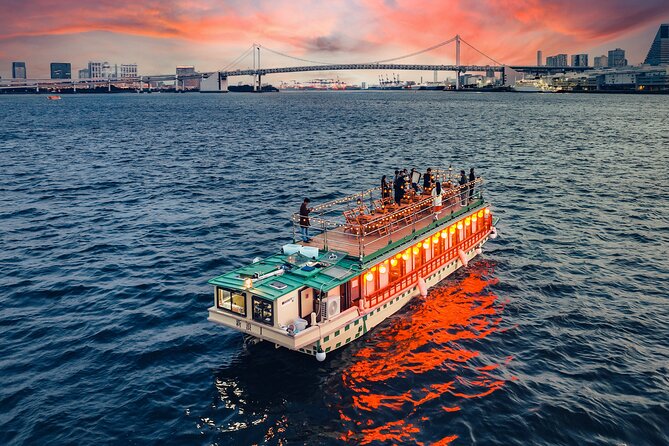
Boarding starts with the main flow: you settle in, you get the onboard performance, then the dinner part happens while you cruise past landmarks. The boat keeps moving slowly, which is exactly what you want for photos and for enjoying the atmosphere.
Here’s what you should know about the comfort side:
- Shoes come off. Plan to wear socks you’re happy to keep on for the length of the ride.
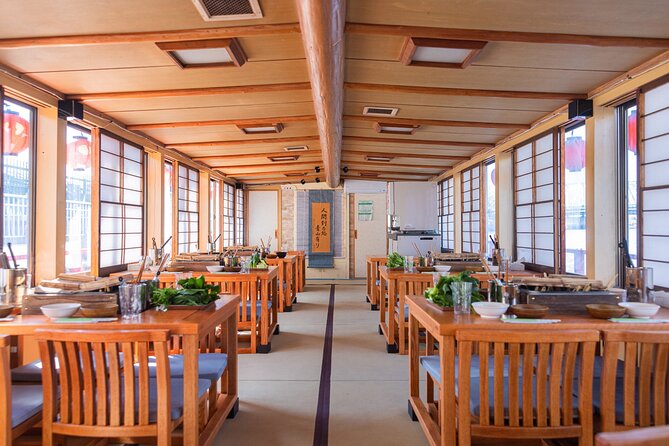
- Seating is assigned randomly and can be tatami-style or Western-style chairs.
- Shared tables may apply, because the boat has limited seating.
That random seating detail sounds small until you’re cold, or until you’re trying to see over someone. If you’re the type who likes prime sight lines, you’ll be glad the design includes an open-air viewing platform. Even if your cabin seat isn’t perfect, you can still go up for the views.
And yes, the drinks are straightforward: you’ll have unlimited soft drinks included on board. Alcohol is not included—it’s available as paid add-ons.
The dinner: sukiyaki hot pot and why it’s a good match for the cruise
If you select the sukiyaki option, you’ll get a hot pot sukiyaki beef meal on board. Sukiyaki is a crowd-pleaser in Japan for a reason: it’s savory, it’s filling, and it feels like comfort food even when you’re eating in a moving setting.
The cruise format helps sukiyaki shine:
- It’s warm, which matters because you may spend time on the deck for photos.
- The hot pot style keeps the meal feeling interactive without requiring you to learn a complicated process.
- The pacing fits the ride time. You don’t feel rushed, but you also aren’t stuck waiting forever.
One practical note from the experience details: portions are described as generous in the feedback you’ll hear, and people also mention repeats/seconds for items like miso soup and rice. I can’t promise every sailing is identical, but the intent is clearly to leave you satisfied rather than just “tasting” food.
If you’re hoping for lots of dietary customization, that’s not clearly stated in the provided details. If you have dietary needs, it’s smart to check directly with the operator before you go.
Live music on the water: the part you’ll remember
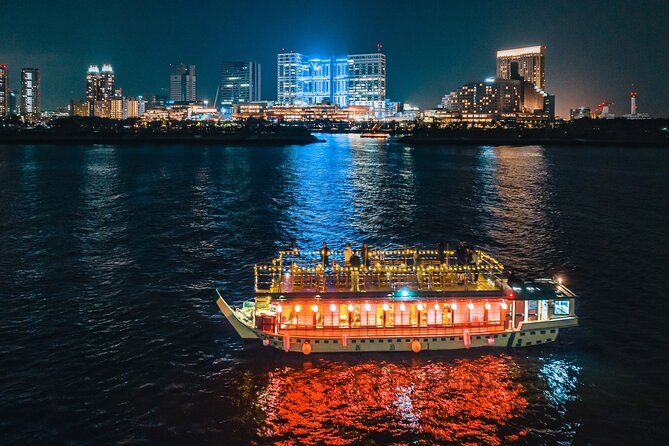
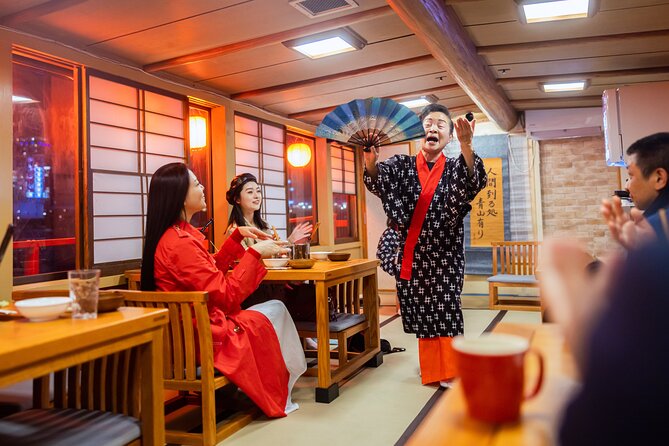
The entertainment is a core reason to book this cruise. You’re not just listening to background sound—you get a live musical performance on board, and it’s presented in a traditional style (shamisen-style singing/performance shows up in the feedback).
What I like about this setup is that the music isn’t trapped in a distant corner. The boat is small enough that performers and hosts feel close to the group. Several standout performer/host names appear in the experiences shared—people specifically mention Karen, Midori, Hibiki, Yoyo, Sheila, Yuzu, and Yuki. Whether your sailing features the exact same cast, the pattern is consistent: a friendly host and musicians who keep the atmosphere going.
Also, you get a rhythm:
1) performance time
2) dinner time
3) sightseeing time with deck photos
That’s why the experience works even if you’re not chasing a guided history lecture.
Rainbow Bridge at night: the biggest “wow” photo moment
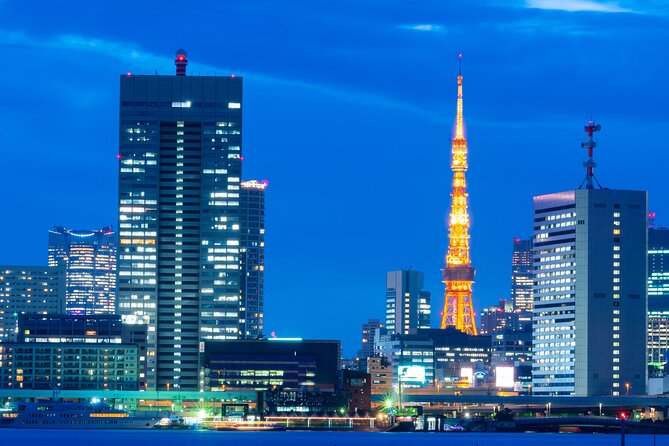
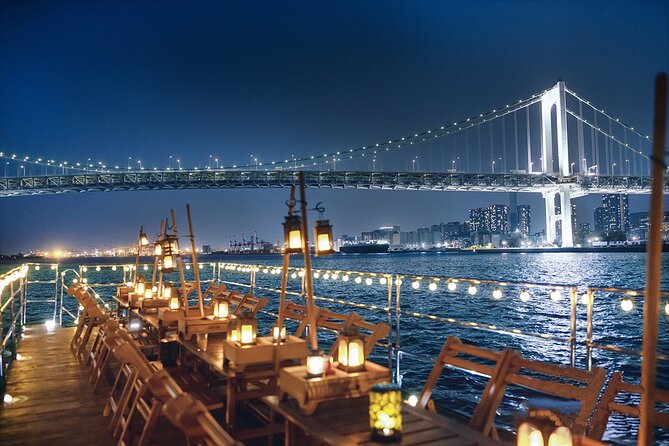
One of the signature things you’re doing is passing the Rainbow Bridge at night. This is a serious visual landmark, and the cruise gives you a clean way to see it from the water.
Here’s what makes it special:
- The bridge was completed in 1993.
- It spans about 3,750 meters.
- It’s supported by two towers that rise roughly 126 meters.
- At night, the lights shift into pink and white.
The key for you as a photographer is timing. Night views look best when you can keep your camera ready for the moment the boat aligns with the bridge. Since you’re already on the water, you don’t have to sprint between viewpoints.
The other advantage is that you’re not dealing with the usual land-view crowd mess. You’re in a moving position with your own vantage point.
Odaiba stop: Statue of Liberty replica and waterfront viewpoints
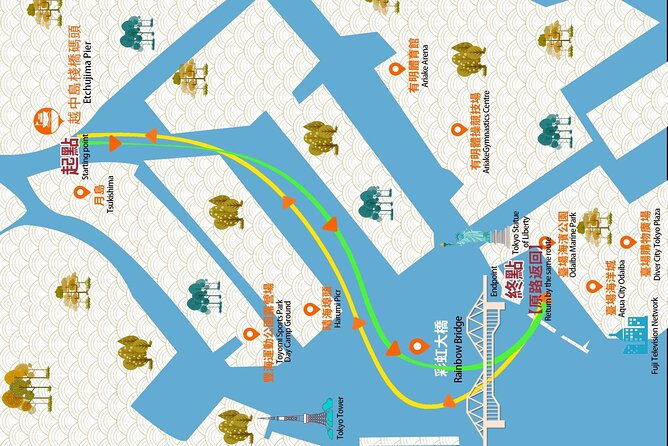
Your cruise schedule also includes time around the Odaiba area, including a Statue of Liberty replica. The detail that matters most: you get about 30 minutes there, and admission tickets aren’t included.
Why that stop is worth it:
- The replica sits in an area designed for big skyline and bay photos.
- You get a change of pace from being inside the boat.
- It’s a recognizable landmark even if you don’t speak Japanese.
The tradeoff is also clear: 30 minutes isn’t long. If you want shopping or a longer Odaiba stroll, this cruise won’t replace a full Odaiba day. Think of it as a photo-and-walk highlight that fits neatly into the dinner cruise.
Fuji TV waterfront: iconic architecture without overplanning
Next up on the route is Fuji TV, described as one of Japan’s iconic media centers, located along the Tokyo Bay waterfront.
Even if you’re not a media nerd, the reason this is useful is simple: the building is distinctive, and the bay setting gives it extra context. You don’t need to know every detail about the company to enjoy it. You just need to look up, keep your camera steady, and enjoy the waterfront geometry.
In practical terms, this stop works for two types of travelers:
- people who want famous Tokyo sights without extra train transfers
- people who want “see it, get the photo, move on” pacing
Tokyo Tower by the water: classic silhouette, 333 meters up
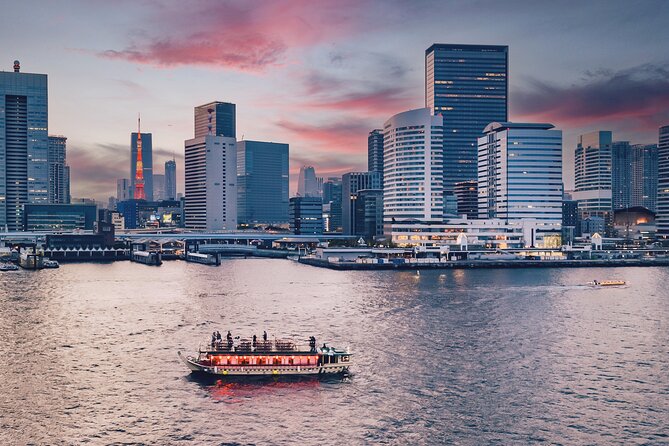
Then you get the big classic: Tokyo Tower. It’s one of the easiest Tokyo landmarks to recognize, and it’s also easy to photograph because it’s tall, cleanly lit at night, and visible from multiple angles around the city.
The provided details worth remembering:
- Completed in 1958
- Height about 333 meters
- Inspired by the Eiffel Tower in Paris
- It symbolizes Japanese cultural and technological energy
The cruise perspective helps because Tokyo Tower looks different from a boat than it does from street level. From the water, it can feel more “layered,” especially with the bay lights around it.
If you care about photos, don’t skip going up top when you can. Cabins can be fine for dinner and music, but the deck gives you the angle and the open-air clarity that the setting is meant for.
Timing, seating, and deck strategy (so you’re not stuck waiting)
This is the part that can make or break your night.
The cruise is around 1 hour 40 minutes, which means you don’t have time for long detours. Your best strategy is to think in zones:
- stay in the cabin for dinner and performances
- plan deck time specifically for Rainbow Bridge and Tokyo Tower light moments
Also, your personal comfort will depend on your seating type. Tatami seating can be cozy but not everyone loves it for long periods. If you get Western-style chairs, you may find it easier to settle in. Either way, the “open-air deck” is your equalizer.
Season matters too. One feedback detail you should take seriously: deck conditions can be cold in winter. If you’re going in colder months, bring warm layers you can manage on a boat. Even if you start warm, you’ll likely spend some time outside for photos.
Who this cruise suits best (and who should consider something else)
This experience is a good fit if you want:
- a night view of major Tokyo landmarks without bouncing between neighborhoods
- a fun meal + entertainment combo
- a smaller-group, friendly atmosphere (the cap is 58 travelers)
It’s especially good for couples, friend groups, and people who want a “one-ticket” evening with minimal planning.
But it may not be ideal if:
- you want a deeply structured, step-by-step guided tour from start to finish (this reads more like scenic sightseeing with highlights than nonstop narration)
- you’re sensitive to cramped spaces, since boats and tatami setups can be tight
- you expect door-to-door transport, because transportation to the pier isn’t provided
Price check: is $65 worth it?
For $65, you’re getting a mix of things that would normally cost you separately in Tokyo:
- a dinner experience (sukiyaki when selected)
- soft drinks included
- live traditional entertainment
- waterfront sightseeing time with major landmarks
Even people who didn’t treat it like a strict tour tend to describe it as a strong value because the experience stays focused. You’re not paying just to sit on a boat—you’re fed, entertained, and shown iconic sights that are hard to string together efficiently on your own.
The main “cost” that might surprise you is the missing alcohol inclusion. Soft drinks are included, but if you want beer/sake, that becomes extra.
Getting the most out of it: practical advice that pays off
A few tips that show up again and again in the details people share:
- Arrive early. People specifically recommend getting there about 15–20 minutes before for smooth boarding.
- Go up for photos. Don’t assume the cabin view will be enough, especially for the bridge and Tokyo Tower light shots.
- Embrace the culture-lite format. This isn’t a formal performance hall. You’re part of the experience, and some seat/table setups can be shared.
- Use the staff for help with pictures. Several host/performer names are credited for being helpful with photo moments.
If you like a calm, romantic mood, this cruise can deliver that too. The night lights plus steady water movement create an easygoing vibe without the chaos of a crowded attraction.
Should you book Tokyo Bay Dinner/Day Cruise with Japan Show and Drinks?
Yes, I’d book it if you want an easy Tokyo night plan that combines sukiyaki, unlimited soft drinks, and live shamisen-style entertainment, plus landmark views from the water. It’s a practical use of time, and the sightseeing is baked into the ride rather than layered on top.
Skip it (or think carefully) if you’re picky about seating comfort, hate cold deck air, or want a fully guided tour experience with nonstop commentary. Also, since you’ll need to remove shoes and the seating is random, plan to be flexible.
If you’re deciding between several Tokyo activities, this is one of the better “value-per-hour” options. You’re not just passing time—you’re watching Tokyo glow while you eat and listen to live music, with the best angles saved for the open-air deck.
FAQ
How long is the Tokyo Bay yakatabune dinner cruise?
It runs for about 1 hour 40 minutes (approx.).
What’s included in the ticket?
You get a yakatabune cruise ticket with unlimited soft drinks on board, plus a Japanese traditional performance on board. A sukiyaki beef meal is included if you select that option.
Is alcohol included?
Unlimited soft drinks are included, but alcoholic drinks are not listed as included and are shown as paid separately.
Do I need transportation to the pier?
Transportation is not provided to the pier. You’ll need to get there on your own.
Do I have to remove my shoes?
Yes. You’ll need to remove your shoes for this experience.
What type of seating should I expect?
Cabin seating is assigned at random and may be Japanese tatami style or Western-style chairs. Shared tables may apply.
What stops will I see during the cruise?
You’ll pass major Tokyo Bay sights connected to the schedule, including Rainbow Bridge and viewpoints around the Odaiba area, as well as Fuji TV and Tokyo Tower.
What if weather is bad?
This experience requires good weather. If it’s canceled due to poor weather, you’ll be offered a different date or a full refund.